What was your road to Damascus event?
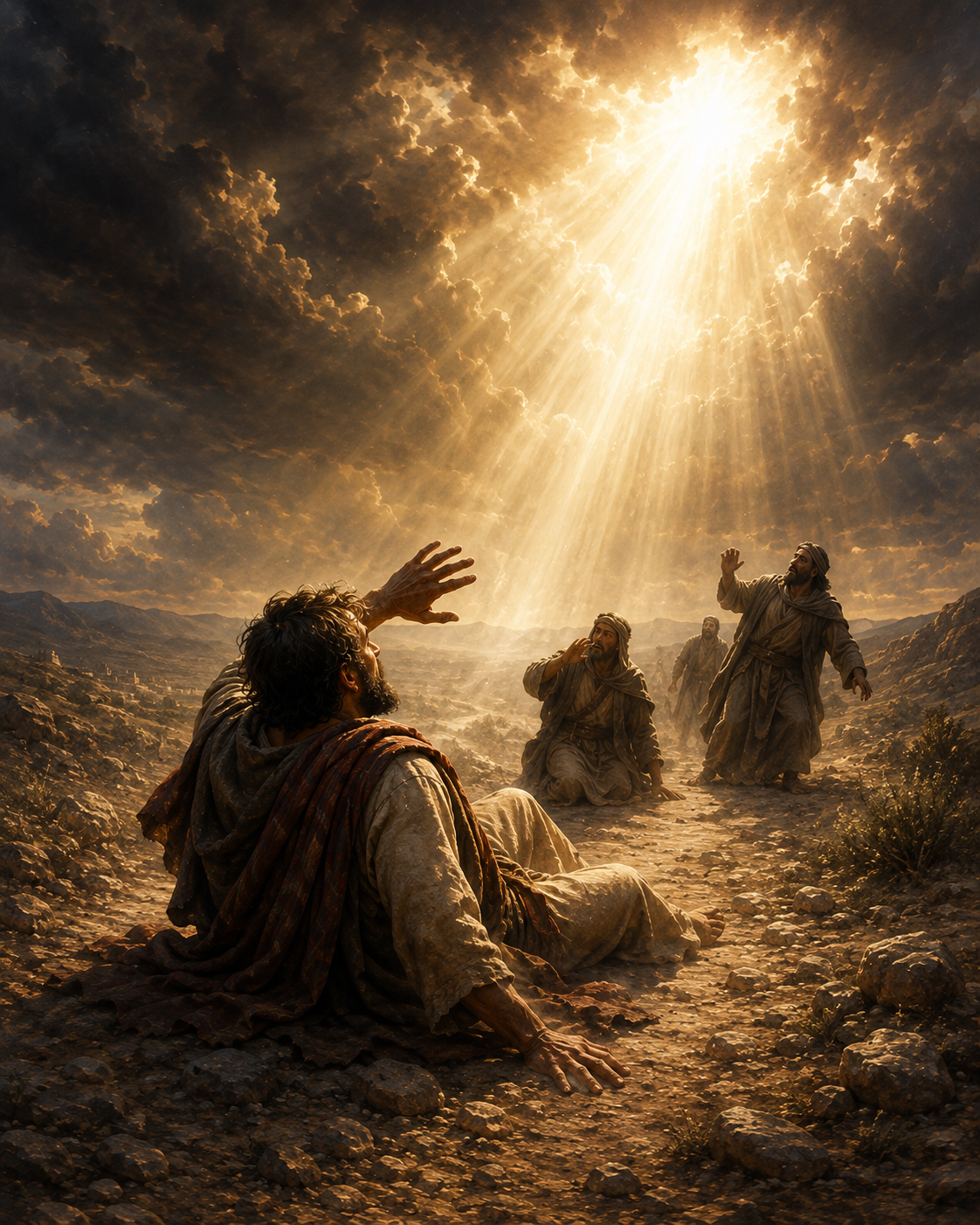
We all carry moments in our lives when the world we inherited no longer explains the world we are experiencing. Scripture calls Paul’s moment the Damascus Road. I have come to see it as a metaphor for the turning points in our own lives.
The biblical story of Paul, then known as Saul, is the archetype of that moment.
Saul was a zealous Pharisee, convinced he was defending God’s law. With letters from the high priest authorizing him to arrest followers of Jesus, he set out for Damascus. As he neared the city, a blinding light broke open the sky, knocking him to the ground. A voice called his name: “Saul, Saul, why are you persecuting me?” When Saul asked who was speaking, the reply came: “I am Jesus, whom you are persecuting.” (Acts 9:1–5)
The story tells us Saul rose blind — physically disoriented, spiritually confronted. What followed was not simply a conversion but a rupture, a reorientation, a rebirth of vocation. A fracture became a doorway.
Over time, that story became a metaphor for my own life.
I have had several crossroads in my life, moments that altered my trajectory. One of them occurred when I was invited to attend a service at a Spiritualist church. I had been raised to condemn anything outside my own tradition. Yet I walked through that small church door and found something unexpectedly familiar: Christian principles, familiar hymns, a minister speaking from the pulpit. And then — more. Phenomena. Communication. Something I could not easily dismiss.
My bright-light moment was simpler than Paul’s. I witnessed phenomena I had been taught to dismiss, occurring right before my eyes. I listened to the words spoken and heard the claimed identity of the person whose voice we were hearing. It was more than a supernatural spectacle. It was an encounter that challenged my inherited certainty.
What was I to do with this new experience?
I had to decide whether to cling to my old belief structure or investigate the possibility that more information was available. As it turned out, I did not have to abandon my faith. I simply expanded it. Only years later did I realize what had actually happened: I did not discard my tradition. I reinterpreted it. I reconsidered some beliefs, broadened others, and allowed new understanding to take root. That expansion has never stopped.
Paul did something similar. He did not take Judaism and simply attach Christianity onto it. His encounter compelled him to reinterpret his inherited tradition — Abraham, covenant, resurrection, Messiah, the God of Israel — through a new lens. His inherited faith did not collapse; his understanding of it was transformed. His faith grew large enough to hold his experience.
That is the point I am making. A Damascus Road moment does not require you to conclude that everything you previously believed was false. It asks only that you keep your critical faculties alive, remain open, and consider new information in light of new experience. Openness is not gullibility; discernment must walk beside it.
A Damascus moment can take many forms: a diagnosis, a death, falling in love, becoming a parent, losing a career, encountering another culture, discovering that someone you judged was nothing like you imagined, reading one book at precisely the right moment, meeting one person.
The common element isn’t the phenomenon. It’s the reorientation.
Continue the journey...
— uMdali Light 🌿