Kindness, Karma, and What My
Grandmother Taught Me
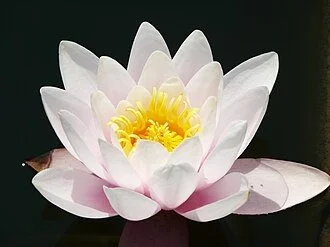
The lotus has long symbolized spiritual growth. Rooted in mud yet rising toward the light, it reminds us that wisdom often emerges through life's experiences—a fitting companion to reflections on karma.
Let’s suppose you had no idea what the word karma meant.
For a good portion of my life, I didn't.
I did, however, know the biblical teaching, "You reap what you sow." Growing up in the Lutheran Church, that idea made sense to me. There was also the old saying, "What goes around, comes around." And even as a young boy, I sensed there was deep wisdom in Jesus' words: "Do unto others as you would have them do unto you."
So perhaps, without realizing it, many of us already have some intuitive understanding of what karma points toward.
It wasn't until I dared to read outside my own religious tradition that I encountered the ancient Indian idea of karma. The word comes from Sanskrit and simply refers to action, work, or deed—and the consequences that follow.
Almost immediately I noticed the similarity to the biblical phrase "you reap what you sow." The language was different. The cultural setting was different. But there seemed to be a common thread running beneath them.
At the time, however, my understanding was still limited. I knew nothing about reincarnation or rebirth. My thinking could only extend as far as my own experience allowed.
Still... I kept wondering.
In my early twenties, as I was beginning my working life, I quietly read Think and Grow Rich by Napoleon Hill and later Autobiography of a Yogi by Paramahansa Yogananda. I read both almost secretly. Looking back, I realize they expanded something inside me. They didn't answer all my questions, but they deepened my awareness that our thoughts, choices, and actions matter.
Perhaps your own journey has unfolded in a similar way.
Most of us have gradually gathered ideas from our family, our faith, our culture, books we've stumbled across, conversations we've had, and our own experiences. Whether we use the word karma or not, many of us recognize something of its essence.
As I continued reading, I discovered that Hindu scholars describe karma in several different ways. Some refer to the accumulated effects of past actions. Others describe the circumstances we encounter in this life, the choices we make today, and the consequences those choices set into motion for the future. If the subject interests you, there is a rich body of literature exploring these distinctions.
What surprised me even more was discovering that karma is understood somewhat differently in Hinduism, Buddhism, Jainism, Sikhism, and other Eastern traditions. The differences were fascinating—but also overwhelming for a newcomer.
Eventually I stopped trying to master every definition.
Instead, I became interested in the larger question.
What if these traditions were each trying, in their own way, to describe something universal?
The more I reflected, the more I began to see karma less as a uniquely religious doctrine and more as an attempt to describe a pattern woven into life itself. Whether we call it karma, "reaping what we sow," or simply cause and effect, our choices seem to matter.
This understanding doesn't feel like punishment to me.
Nor does it feel like reward.
It simply feels like reality.
Our actions shape our lives.
Our thoughts shape our actions.
Together, they shape who we become.
How you interpret that is, of course, deeply personal.
In my own writing, I realize readers will come from many different traditions. Some may see karma as a spiritual law. Others may understand it psychologically. Others may reject the idea entirely. I am comfortable leaving room for those differences.
But if thoughts influence our actions, and actions influence the lives of others, then it seems difficult to deny that consequences matter.
We can usually recognize the consequences of dishonesty, cruelty, or selfishness in other people. But if we're honest, we can also recognize those moments in our own lives when fear, anger, ego, pride, or poor judgment eventually returned to teach us something we needed to learn.
Sometimes the lesson comes quickly.
Sometimes years later.
Either way, life has a remarkable way of inviting us to grow.
That, at least, is how I have come to understand what many people call the “School of Hard Knocks” — learning primarily through painful consequences.
Some spiritual traditions go much further than this. They teach that as consciousness matures, we gradually learn to live in ways that create less suffering for ourselves and others. Compassion replaces selfishness. Service begins to replace self-centeredness. We begin to learn from inner guidance rather than painful consequences; we gradually move from the School of Hard Knocks to what might be called the “School of Inner Direction.”
Whether one understands this as balancing karma, spiritual maturity, or simply becoming a better human being matters less to me than the direction itself.
People claim all kinds of doctrines and religious beliefs. But to me, what affiliation or group a person says they belong to matters less. How do they treat others? What kind of person are they? Actions speak far louder than words.
One of the greatest people I have ever known was my grandmother.
She was one of the kindest, gentlest people I have ever met. She didn't attend church as often as she would have liked. Yet she lived a life filled with generosity, patience, and love. In many ways, I have quietly tried to model my own life after hers.
My grandmother probably never used the word karma.
She simply lived a life of kindness.
Looking back, I sometimes wonder if understanding begins there—not with mastering unfamiliar words or complex philosophies, but with becoming the kind of person whose very presence brings a little more peace and happiness into the lives of others.
Where such souls continue their journey, if there is indeed a journey beyond this life, is a question I happily leave for you to ponder.
Continue the journey...
— uMdali Light 🌿
The lessons my grandmother taught me did not end with her story. They led me to a larger question: What becomes of the kindness—or harm—we leave behind?
A Note From the Margins: On Kindness and Consequence
Karma is often described simply as cause and effect — what we do eventually comes back to us. But I think there is a little more to it than that. If you would like to explore what I mean when I use the word karma in these reflections, I have written a brief note in the margins.