How does one move beyond dualistic thinking?
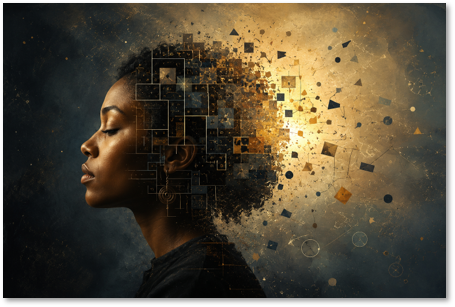
As humans we tend to sort things out in a binary sort of way. When something is good, then there is the bad. If I am right, then you must be wrong. These are my people; those across the line are not. Then something else happens: we become attached to the categories created. We become fixed and calcified within one position or the other—what some refer to as dualistic thinking. The question then becomes how do we move beyond dualistic thinking?
Well… this is not a simple task. Look around. How often do we see rigid, hardened beliefs? “This is the way it is.” “I’m right, and you’re wrong.” “My way, or the highway.” The challenge is, there must first be a willingness to change. It is very difficult to alter an old pattern when an individual refuses to admit that a pattern exists.
Sometimes we don’t even create the categories ourselves. Many are inherited. We are taught “us” and “them.” Or our culture defines success and failure. We learn religious or social categories. And we learn who supposedly belongs where. Eventually, without even questioning the pattern, we mistake those inherited categories for reality itself.
So, the first step is to recognize the pattern, and then to recognize that our resistance to changing the pattern may itself have been conditioned.
From there it becomes a matter of observation and recognition. It requires stepping outside of yourself and objectively viewing your own actions. For me, this recognition did not happen all at once. My story about the Luv Bug is an example. I was primed to observe my own behavior. And then the Universe showed me. My goodness… did the Universe show me. It was a silly thing to observe—and yet deeply revealing.
I did my homework, too. I dared to read books at a relatively early age that emphasized the power of words, deeds and actions. My thoughts and what I did mattered. I took seriously the Golden Rule and began to realize that my actions affected others.
Then, with time and contemplation, I began to see that my decisions (both good and bad) were meaningful because they led to consequences that I could readily see. This might not have happened if I was not willing to change or self-reflect.
As I aged, the patterns became painfully obvious. Free will also plays a role. I was never the type that liked to be told what to do. As my father often told me, “I was hard-headed.” From his perspective this was not a good thing. From my perspective I wanted to experience life on my own terms. But in reality, I made many poor decisions. But I learned.
And then, at a certain point in my life, a significant transition took place. I learned something from a comment made by a wise person who looked at all the decisions they experienced in their long life as neither good nor bad. I didn’t understand what this meant at first. But in time it made sense. I had to ponder his words. With age, he said, his experiences began to blend together—where even the painful choices became as valuable as the wise ones.
It didn’t mean that unwise choices were never made. Or that some of the choices ended with painful consequences. Discernment allows you to recognize the distinction between a wise and an unwise choice. But the experience itself doesn’t need to be condemned as worthless or reduced forever into a category of “bad.” This was why, even as a young child, I resisted the claim that I was forever a sinner. My intuition and inner knowing led me elsewhere.
Over time, I came to understand Earth as a learning ground, part of a larger process through which consciousness can grow. As discernment grows, we can begin to move from the School of Hard Knocks to the School of Inner Guidance. You don’t have to touch the hot stove to know that it burns the flesh.
I also did not give up the power of free will and the ability to make my own decisions. I observed the consequences of those decisions. And I learned from those consequences. I did not surrender responsibility for the consequences of my actions. Conscious choices are the foundation for elevating one’s consciousness when we are vigilant and observant. It would not improve my situation, or anyone else’s, if we constantly looked to outside sources or to a specific someone—a guru—to make our decisions for us.
Growth came through experiencing the consequences of my choices, evaluating them, and examining my reaction to the circumstances in which I made them. And then comes the hardest part: asking what truly motivated the choice. Was I really choosing freely—or was fear choosing? Was ego choosing? Was conditioning choosing? Was anger choosing? Was love choosing?
The realization begins… You have free will. You act on your free will to make decisions and choices. There are consequences for those decisions, and the responsibility for those decisions is yours, and yours alone. You develop recognition and discernment. Each conscious exercise of free will becomes another opportunity for growth. You learn that accepting responsibility does not require condemning yourself. Stress and condemnation are released. You might even smile and laugh at your choices. Everything begins to fit together in a meaningful way.
I won’t sugarcoat it. This was hard work for me. I had to resist the cultural training of a “me first” society. Denial and a lack of attention were constant battles. It was much easier not to look too closely at myself. But without that willingness to look, nothing changes.
Over time, I came to understand that a particular level of consciousness can magnetize us, holding us within familiar patterns. Breaking that hold requires recognition. And work. We have to be willing to see the patterns that keep repeating. But if we decide we wish to grow—to break free—each decision begins to weaken the hold.
In this context, you begin to realize that life is more nuanced than simply viewing what happens in our lives as either right or wrong. Good or evil. You begin to move out of the judgmental binary level of dualistic thinking. It does not mean abandoning discernment. It means moving beyond the need to reduce every choice to simply good or bad—and then condemn ourselves for having made the choice. You recognize how you can use a previous choice to make a more enlightened choice in the future that brings you closer to a Christ-like oneness.
You realize that a conscious choice isn't merely about making better decisions. It is becoming increasingly aware of the source from which the decision arises. This is how duality loosens its grip.
Continue the journey...
— uMdali Light 🌿
For the story behind the Luv Bug reference…